


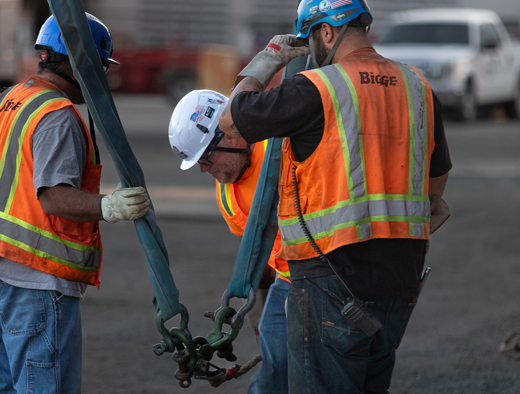
As part of our ongoing discussion on the role of the Safety Coach, this article focuses on observing work practices through a behavior-based safety approach.
Behavior-Based Safety, often called BBS, is a systematic way to promote safety in the workplace. At its core, it focuses on identifying, reinforcing, and increasing safe behaviors while reducing at-risk behaviors. Instead of reacting after an incident, BBS emphasizes observation, coaching, and reinforcement before injuries occur.
A well-structured BBS process clearly defines safe behaviors and work practices that reduce risk exposure. It provides supervisors and crews with a consistent method to observe, document, and improve safety performance in real time.
Why Behavior-Based Safety Matters
An effective behavior-based process helps ensure safe work practices occur more frequently than at-risk behaviors. Over time, this shifts the culture. Safe actions become routine, expected, and automatic.
The goal is simple. Reduce at-risk behaviors to the lowest practical level while increasing safe behaviors across the jobsite.
Supervisors and crew members conduct observations within their own work units. This creates ownership. It also allows coaching strategies to be tailored to the specific tasks, hazards, and operational demands of the organization.
Observations are critical in a BBS system. They provide objective data. That data allows safety coaching to be specific, measurable, and credible.
Observing Behavior Effectively
Observations are typically built around a checklist or a Job Hazard Analysis. These tools help structure what is being observed and ensure important safety practices are consistently reviewed.
Using a checklist or JHA helps the Safety Coach remain objective, specific, and positive during discussions with employees. Instead of saying, “Be more careful,” the coach can reference a defined behavior such as maintaining proper fall protection tie-off or keeping clear of the swing radius.
This shifts the conversation from opinion to observable action.
Building an Effective Observation Checklist
When developing an observation checklist or JHA, several key points should be considered.
1. Keep It Practical and User-Friendly
Checklists can take many formats. The goal is not to create paperwork. The goal is to create a reliable, easy-to-use tool that supports real observations in the field.
If it is too complex, it will not be used consistently.
2. Identify Critical Safe Behaviors
The checklist should include behaviors essential to maintaining a safe workplace. There must be balance. Include the most important safety practices without overwhelming the observer with unnecessary detail.
For organizations already using Job Hazard Analyses, this step becomes more straightforward. Many of the critical behaviors are already defined within task planning documents.
3. Describe Behaviors Clearly
Each item must be detailed enough that two independent observers watching the same task would record similar results. Vague statements such as “works safely” are not helpful. Specific descriptions such as “uses taglines during load control” or “maintains three points of contact while climbing” create consistency.
Clarity drives reliability.
4. Test the Checklist in the Field
Designing a valid and practical checklist requires taking it into the work environment. Work teams should test draft versions during real operations.
Observations and documentation should take no more than fifteen minutes per session. If it takes longer, the process may need simplification.
Observations should also occur during all aspects of the workday, not just during planned windows. Safety behavior must be consistent across every phase of operations, including setup, active lifting, breakdown, and transitions.
The Safety Coach Mindset
Behavior-Based Safety is not about catching mistakes. It is about reinforcing what right looks like.
When coaches consistently observe, provide feedback, and recognize safe performance, crews begin to internalize those behaviors. Over time, safety stops being something enforced and becomes something owned.
The Final Lift
Observations are one of the most powerful tools a Safety Coach has. When done correctly, they create objective data, meaningful coaching conversations, and measurable improvement in safe behaviors.
Are your safety observations structured and consistent, or are they informal and reactive?




Lorem ipsum dolor sit amet, consectetur adipiscing elit. Suspendisse varius enim in eros elementum tristique. Duis cursus, mi quis viverra.
Lorem ipsum dolor sit amet, consectetur adipiscing elit. Suspendisse varius enim in eros elementum tristique. Duis cursus, mi quis viverra.