


Spring and summer mark the busiest time of year for highway and outdoor construction. With that increase in activity comes a higher exposure to moving traffic—one of the most serious hazards crews face on the job.
While barricades and warning signs are a starting point, they are not enough on their own. When workers are exposed to live traffic, additional controls must be in place to protect both the crew and the traveling public.
A properly implemented Traffic Control Plan is critical. When required, trained flaggers must be present to manage traffic flow and maintain a safe work environment. The question isn’t whether protection is needed—it’s how well it’s executed.
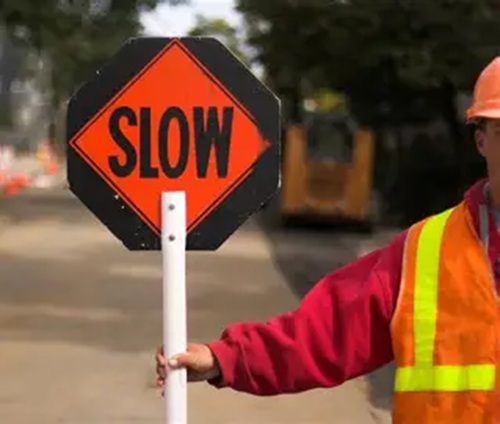
Key Elements of Flagger and Work Zone Safety
Traffic Control Devices
Effective traffic control starts with clear direction. Signs, signals, and message boards help guide drivers safely through or around work zones. Cones, barrels, and barricades define the work area and create separation from traffic.
Work Zone Protection
Physical barriers add another layer of defense. Concrete barriers and crash cushions help shield workers from errant vehicles and reduce the severity of potential impacts.
Personal Protective Equipment (PPE)
Visibility is non-negotiable. Flaggers and workers must be seen well in advance—ideally from at least 1,000 feet away. High-visibility reflective clothing, along with reflective hard hats, significantly improves visibility.
All garments should meet ANSI standards and be selected based on the level of risk:
- Class III Apparel
Provides the highest level of visibility. Required for high-speed traffic environments (over 50 mph), complex work zones, and situations with high task loads or challenging weather. These garments cover the torso and limbs and include jackets, pants, coveralls, or rainwear. This is the standard for most roadway construction operations. - Class II Apparel
Suitable for lower-speed environments (over 25 mph) where visibility is still a concern. Common for crossing guards, utility crews, and personnel working near roadways with moderate traffic speeds.
Choosing the right gear for the job conditions matters. Not all reflective materials perform the same—match the equipment to the environment.
Communication Devices
Clear communication keeps traffic moving and workers safe. Two-way radios allow flaggers and crews to stay coordinated, especially on larger or more complex job sites.
Lighting
If work extends into low-light conditions, proper illumination is required. Flagger stations should be lit according to the Traffic Control Plan, typically providing 10–20 foot-candles of light to ensure visibility for both workers and drivers.
Bottom Line
Flagger safety comes down to visibility, separation, and communication. When these elements are planned and executed correctly, the risk drops significantly. When they’re not, the margin for error disappears.




Lorem ipsum dolor sit amet, consectetur adipiscing elit. Suspendisse varius enim in eros elementum tristique. Duis cursus, mi quis viverra.
Lorem ipsum dolor sit amet, consectetur adipiscing elit. Suspendisse varius enim in eros elementum tristique. Duis cursus, mi quis viverra.